


Cryptocurrency Regulations in Australia: Key Crypto Laws and Compliance in The Land Down Under
- Leila Haddad, LLM (Tech & Financial Regulation)

- Dec 4, 2025
- 7 min read
Australia’s become one of the world’s most crypto-friendly nations, with straightforward laws that try to balance investor protection and innovation. In September 2025, the Australian government dropped draft legislation that’ll force crypto exchanges and digital asset platforms to get an Australian Financial Services Licence (AFSL), putting them under the same rules as banks and other financial companies. For a long time, crypto businesses here operated in a weird regulatory gray zone, so this is a pretty big shift.

The new rules expand the Corporations Act to cover digital asset trading and custody. Now, platforms have to separate client funds, get solid insurance, and follow strict security standards. Still, the government carved out exemptions for smaller operators—those handling less than $5,000 per customer or under $10 million in yearly transactions—so startups aren’t crushed by compliance costs right out of the gate.
Companies get until late 2025 to weigh in on the draft rules before anything’s finalized. If all goes as planned, the final law kicks in by 2026.
Key Takeaways
Crypto exchanges and custody platforms in Australia will need financial services licenses in 2026
Small crypto operators with low transaction volumes get exemptions from full licensing
New regulations aim to protect consumers but keep Australia’s crypto-friendly vibe
Australian Regulatory Framework for Cryptocurrency
Australia runs a federal regulatory system, with two main agencies watching over crypto. Existing financial laws have been tweaked to fit digital assets, and the framework keeps evolving as new legislation rolls out through 2025.
Key Regulatory Bodies and Their Roles
Australian Securities and Investments Commission (ASIC) is the main regulator for crypto exchanges and digital asset platforms. ASIC enforces the Corporations Act 2001 and ASIC Act, focusing on consumer protection and market integrity.
Crypto service providers need to get an AFSL from ASIC. The agency also gives guidance on how securities laws hit Initial Coin Offerings and different crypto assets.
Australian Transaction Reports and Analysis Centre (AUSTRAC) handles anti-money laundering (AML) compliance for crypto. Digital Currency Exchanges have to register with AUSTRAC under the Anti-Money Laundering and Counter-Terrorism Financing Act.
AUSTRAC makes crypto businesses set up customer ID procedures, report anything suspicious, and keep detailed transaction records.
Legal Definitions and Classification of Digital Assets
Australian law treats cryptocurrency as property, not legal tender. The Australian Tax Office considers digital assets as capital gains tax property for individual investors.
ASIC breaks down crypto assets into three main types:
Utility tokens – give access to certain services or products
Exchange tokens – work as digital currencies for payments
Security tokens – represent ownership or investment contracts
Stablecoins get special treatment. Payment stablecoins are regulated as stored-value facilities, with some carve-outs for specific cases.
Different crypto activities—trading, custody services, brokerage—each face their own set of rules under the growing framework.
Current Laws Governing Cryptocurrency
The Corporations Act 2001 covers crypto assets that count as financial products, which includes a lot of tokens and digital securities offered to Aussies.
Crypto exchanges need to follow existing financial services laws. The National Consumer Credit Protection Act 2009 covers crypto lending and related credit services.
Here’s a quick breakdown of compliance requirements:

Small firms and software developers don’t have to jump through all the licensing hoops. The point is to help innovation without ditching consumer protection.
Recent and Proposed Regulatory Changes
September 2025: The Treasury put forward draft legislation requiring crypto exchanges to get AFSLs.
ASIC rolled out a class exemption so licensed intermediaries can distribute stablecoins—licensed firms can now offer fiat-pegged digital assets without jumping through extra regulatory hoops.
April 2025: Mandatory licensing for Digital Asset Platforms (DAPs) landed. This moved Australia from a hands-off approach to a more active, consumer-focused regulatory stance.
The government’s taking feedback on the draft crypto rules until October 24, 2025. After that, final rules will spell out exactly what exchanges, custody services, and brokers need to do.
March 2025: Payment stablecoins got classified as stored-value facilities, with the Treasury setting out minimum capital and ongoing compliance requirements for crypto providers.
Licensing, Compliance, and Consumer Protection
Australia’s crypto rules center on licensing through ASIC, tough anti-money laundering compliance with AUSTRAC, consumer protections under Australian Consumer Law, and detailed tax rules from the Australian Taxation Office.
Licensing Requirements for Crypto Businesses
Crypto exchanges and service providers have to get an AFSL to operate legally. ASIC treats cryptocurrency as a financial product, so these platforms fall under the Market License Framework.
Draft legislation from September 2025 says crypto exchanges and custody providers need AFSLs, and ASIC is the main gatekeeper.
April 2025 kicked off new licensing rules for Digital Asset Platforms (DAPs). Now, Australia’s moved from a passive to a more hands-on, consumer-first approach.
Licensed companies must meet minimum capital requirements and follow financial services rules. Wallet and custody providers also need licenses.
Exemptions exist for:
Small firms under certain thresholds
Software developers
Some payment stablecoin providers (in specific cases)
The government confirmed that 2025 is the year crypto regulatory reforms actually take effect, finally giving the industry some clear licensing paths.
Anti-Money Laundering and Counter-Terrorism Financing Compliance
AUSTRAC enforces AML and counter-terrorism financing rules for crypto. Digital currency exchanges have to register with AUSTRAC under the AML/CFT Act.
Key AML requirements:
Customer ID and verification
Monitoring and reporting transactions
Record keeping
Ongoing due diligence
The AML/CFT Act has covered digital currency exchanges since 2018. The Attorney General opened the second round of AML/CFT Act consultations in May 2024.
Crypto providers need to run strong compliance programs that line up with Financial Action Task Force standards. If they don’t, they risk big fines or losing their license.
AUSTRAC works with global regulators to fight money laundering through blockchain platforms and keep an eye on cross-border transactions.
Consumer Protection and Market Integrity Measures
ASIC focuses on protecting consumers and keeping crypto markets fair. The Australian Competition and Consumer Commission (ACCC) makes sure crypto businesses stick to Australian Consumer Law.
Main consumer protection rules:
No misleading or deceptive conduct
Clear product disclosure statements
Protection against unconscionable conduct
Fair contract terms
Crypto exchanges have to be transparent about their services and products. If they offer investment products involving crypto, they need to provide proper disclosure docs.
Australian Consumer Law covers crypto deals, giving buyers rights if products or services are defective. MoneySmart has resources to help people understand the risks.
For market integrity:
Markets must run fairly and orderly
No market manipulation
Proper custody for client assets
Customer funds must be kept separate
ASIC keeps a close watch on these rules and can crack down on unlicensed activity or bad behavior in financial markets.
Taxation and Reporting Obligations
The Australian Taxation Office treats crypto as property, so it’s subject to capital gains tax. People and businesses have to report crypto transactions on their taxes.
Crypto gains are taxed from 0% to 45% depending on income. If you hold crypto over a year, you get a 50% capital gains discount.
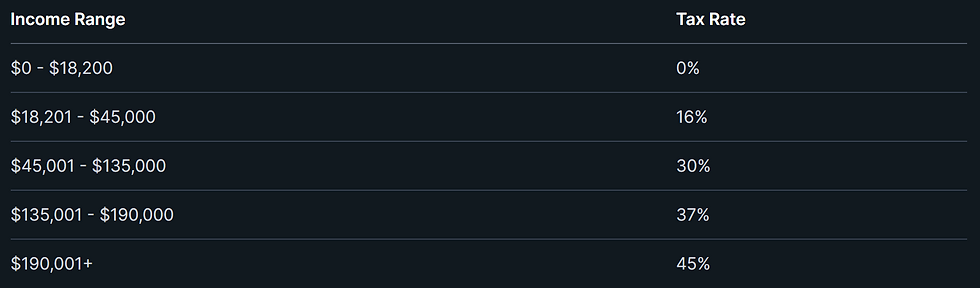
The tax reporting deadline for 2024-2025 is October 31, 2025. The ATO tracks crypto transactions and can slam you with heavy penalties for dodging taxes.
You’ll owe tax if you:
Sell crypto for cash
Swap one crypto for another
Use crypto to buy stuff
Gift crypto to someone
Businesses using crypto have to keep detailed records and report transactions as part of their regular taxes. Managed investment schemes involving crypto have extra reporting requirements.
Frequently Asked Questions (FAQs)
Crypto is legal in Australia. Traders pay taxes on gains, exchanges register with AUSTRAC, and activities fall under existing financial rules—with new reforms on the way.
What are the current Australian legal requirements for cryptocurrencies transactions?
Crypto transactions are legal here. Bitcoin and other digital assets fall under existing financial and AML laws.
There’s no standalone crypto law yet. Instead, current financial regs apply depending on how the crypto activity is set up.
Businesses offering crypto services might need an AFSL if their assets count as financial products under the Corporations Act.
Smart contracts are allowed under the Electronic Transactions Act, as long as they meet the usual requirements for legal contracts.

How do taxation laws apply to cryptocurrency trading and mining in Australia?
Crypto profits are taxed under Aussie income tax rules. If you trade, you pay tax on gains from buying and selling digital assets.
If you mine crypto, it might be taxed as business income—depends if you’re doing it as a hobby or a business.
Capital gains tax applies when you sell crypto for profit. The rate depends on how long you held the asset.
What are the anti-money laundering regulations concerning cryptocurrencies in Australia?
Crypto exchanges have to register with AUSTRAC and follow the Anti-Money Laundering and Counter-Terrorism Financing Act.
They need to check customer IDs and report suspicious activity, just like banks.
The government plans to update AML laws soon, so requirements for crypto providers may get stricter.
Could you outline the registration process for cryptocurrency exchanges operating in Australia?
Exchanges have to register with AUSTRAC as digital currency exchange providers—no registration, no business.
They need to set up AML compliance systems, identify customers, and monitor transactions.
Some exchanges also need an AFSL, depending on what kinds of crypto assets they offer.
How are cryptocurrencies classified under Australian financial law?
Classification depends on the crypto asset’s structure and rights. ASIC decides if crypto assets are financial products on a case-by-case basis.
Some crypto assets might be managed investment schemes. Others could count as securities or derivatives.
Bitcoin and Ethereum likely meet ASIC’s criteria for exchange-traded products. ASIC sees these as reasonable underlying assets for certain investment products.
Are there any upcoming changes to the Australian cryptocurrency regulations that I should be aware of?
Treasury’s working on a new licensing framework for crypto asset service providers, which means digital asset intermediaries will soon need to get AFSLs.
There’s also talk of new rules for stablecoins. If you’re a major stablecoin issuer with more than $100 million, you’ll have to get authorized by APRA.
Payment system reforms are on the horizon too. The government wants to bring digital payment services under a modernized licensing setup.
And, not to be overlooked, they’re rolling out stronger consumer protection measures. Expect mandatory industry codes aimed at tackling crypto scams.


Comments