


How to Short Bitcoin: Effective Strategies and Tools Explained
- Daniel Okoye, CPA (Crypto Tax)

- Sep 22, 2025
- 5 min read
Bitcoin's wild price swings attract traders looking to profit when values drop, but plenty of investors aren't sure how to take advantage of downward trends. Shorting Bitcoin basically means you borrow the cryptocurrency, sell it at today's price, then (hopefully) buy it back cheaper later—returning what you borrowed and pocketing the difference. It's a way to make money when Bitcoin falls, not just when it climbs.

There are a few main ways to short Bitcoin, ranging from straightforward margin trading on crypto exchanges to more advanced moves with futures contracts and options. Each route comes with its own risks, capital needs, and possible rewards, so it's smart to know what you're getting into before throwing your money at it.
You'll want to think carefully about which platform to use, when to enter or exit, and how to manage risk. Bitcoin's notorious volatility can wipe out positions fast if things go the wrong way. Knowing the nuts and bolts here can help you decide if shorting fits your investing style—or if it's just not worth the stress.
Core Methods to Short Bitcoin
Traders have a few solid options for shorting Bitcoin, each with its own quirks and risk levels. You can borrow and sell Bitcoin directly, use futures or options, or trade contracts that just mirror Bitcoin's price.
Margin Trading and Leverage Explained
With margin trading, you borrow funds from an exchange so you can short Bitcoin with more money than you actually have. The exchange lends you Bitcoin, which you sell at the current price.
How margin trading works:
You borrow Bitcoin from the exchange
Sell the borrowed Bitcoin right away
Buy it back later (hopefully at a lower price)
Return the Bitcoin you borrowed, plus interest
Leverage lets you take bigger positions than your own cash would allow. Here’s a quick look at how that shakes out:
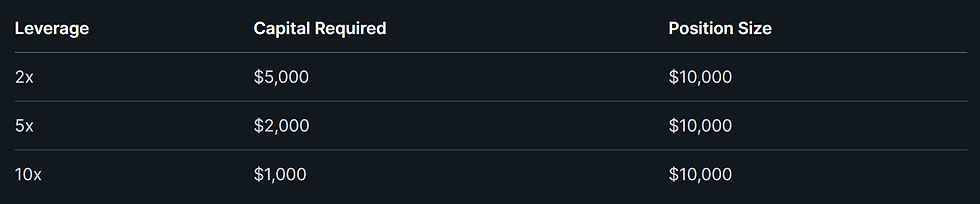
Higher leverage can amplify profits, but it also means you can lose your whole stake fast. If Bitcoin drops 10% and you’re at 10x leverage, you double your money. But if it rises 10%, you’re wiped out. Not for the faint of heart.
Shorting with Bitcoin Futures Contracts
Bitcoin futures let you agree to sell Bitcoin at a set price on a future date—even if you don’t own any. That means you can bet on prices falling without ever touching the coins.
Most major exchanges like Binance and Bybit offer standardized futures contracts. Each one spells out how much Bitcoin it covers, when it expires, and how it settles.
What stands out about Bitcoin futures:
Fixed contract sizes and expiration dates
Some settle in cash, others in Bitcoin
You’ll need to post margin, usually 5-50% of the contract’s value
Positions get marked to market daily
If you sell a futures contract at $50,000 and Bitcoin falls to $45,000, you pocket $5,000 per contract. If it goes the other way, well, you’re on the hook for the loss.
Using Options and Put Options for Shorting
Bitcoin options give you the right (but not the obligation) to sell Bitcoin at a certain price. Put options are the classic shorting tool here.
Put options have a few key traits:
The strike price sets your selling price
You pay a premium up front for the option
Each option has an expiration date
If the trade doesn’t work out, you can just let it expire
Some traders also short Bitcoin by selling call options. If the price stays below the strike price, you keep the premium.
Binary options are a more all-or-nothing bet. You predict whether Bitcoin will be above or below a certain price at expiration—simple, but risky.
Options usually require less capital than margin trading since you’re only paying the premium, not borrowing big sums.

Trading Bitcoin CFDs and Perpetual Futures
Contracts for difference (CFDs) let you trade on Bitcoin’s price without ever owning the coin. You make (or lose) money based on the price difference between when you open and close your position.
Some perks of CFDs:
No expiration dates
You can trade tiny amounts
Lower upfront cash needed
Some traditional brokers offer them
Perpetual futures blend features of futures and CFDs. They never expire and use funding rates to keep prices close to the real Bitcoin price.
Perpetual futures highlights:
Trade 24/7, no rollovers needed
Funding payments every 8 hours
Leverage can go as high as 100x (though that’s, frankly, extreme)
Mark price systems help prevent price manipulation
Both CFDs and perpetual futures give you flexible ways to short Bitcoin with less capital and more control over your positions.
Platforms, Risks, and Practical Considerations
Shorting Bitcoin successfully means picking the right platform and knowing the financial requirements and risks. Different exchanges offer their own features, fees, and collateral rules, which can seriously affect your results.
Top Crypto Exchanges for Shorting Bitcoin
Binance stands out with loads of margin trading and futures options. You can get up to 125x leverage on Bitcoin futures, and trading fees start at 0.02%.
Kraken is known for solid margin trading up to 5x leverage on spot markets. Advanced order types and good security make it a favorite for institutional traders.
Coinbase has limited shorting on Coinbase Pro, with basic margin features. It’s more focused on spot trading, but you can access CFDs in some regions.
OKX offers a wide range of derivatives, including perpetual swaps and options. You can use complex shorting strategies here, with leverage up to 100x.
Deribit is the go-to for Bitcoin options and futures. Pros like it for advanced hedging and shorting.
The Chicago Mercantile Exchange (CME) lists institutional-grade Bitcoin futures—great for big investors who want regulated exposure to shorting.
Collateral, Margin Calls, and Trading Fees
Collateral requirements change from one exchange to another, but most ask for 20-50% up front for basic shorting.
Margin calls happen if Bitcoin’s price moves against your short. You’ll need to add funds or the platform will close your position automatically.
Here’s a quick fee rundown:
Trading fees: Usually 0.01% to 0.1% per trade
Funding rates: Typically -0.01% to 0.01% every 8 hours on perpetuals
Borrowing costs: 0.01% to 0.05% daily for margin positions
If you want something a bit different, the ProShares Short Bitcoin Strategy ETF (BITI) gives you short exposure with an annual management fee around 0.95%. No margin headaches, but you do pay that ongoing fee.
Risk Management and Counterparty Risk
Counterparty risk is a big deal when you're shorting crypto. If an exchange fails or glitches out, you could lose everything you put in.
For risk management, it's smart to use position sizing, stop-loss orders, and spread your trades across different platforms. Don’t ever put more than 2-5% of your total capital into a single trade—seriously, that's just asking for trouble.
You might want to check out prediction markets like Polymarket and Gnosis for a different flavor of shorting exposure. They come with their own quirks and risks, not quite like your typical crypto exchange.
Exchange security? It's all over the map. I’d look for cold storage, some kind of insurance, and maybe a nod to regulatory rules before trusting a platform with my funds.


Comments